Sony E-mount lenses: the practical buying guide
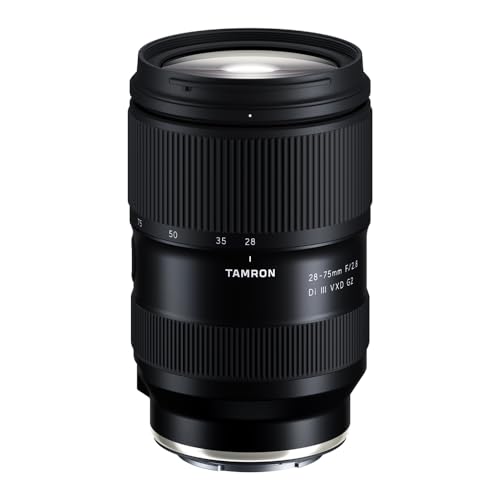
The short version: on full frame, start with the Tamron 28-75mm f/2.8 G2 and add an 85mm or 50mm f/1.8. On APS-C, replace the kit zoom with the Sigma 18-50mm f/2.8 and add the Sigma 30mm f/1.4.
Last updated November 2, 2026Sony’s E-mount has the deepest lens selection of any mirrorless system. Sony opened the mount specification to other manufacturers early, so Sigma, Tamron, Samyang, Viltrox, Tokina and others all make autofocus lenses for it. That’s great for choice and price, but it also means there are dozens of near-identical options at every focal length. This guide narrows it down to the lenses we’d actually recommend, explains how full-frame and APS-C lenses mix, and links each pick to its current price.
Sony E-mount bodies, briefly
Every Sony Alpha mirrorless camera — the a6000 family, the ZV-E10 series, and the full-frame a7, a7C, a7R, a7S and a9/a1 lines — uses the same E-mount. What changes is sensor size. Rows tagged “On our deal list” are bodies we actively track.
| Body | Sensor | Best for | Price |
|---|---|---|---|
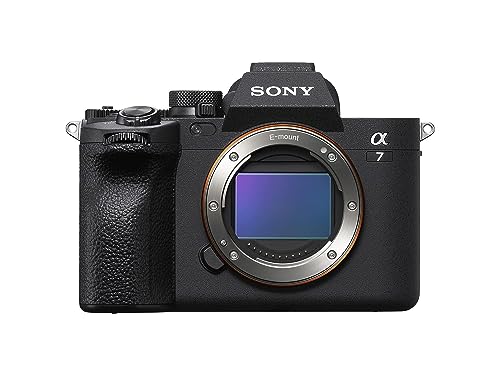
| Sony Alpha 7 IV On our deal list | Full frame · 33MP | All-round hybrid stills + 4K video; the default full-frame E body | List ~$2,499; watch for bundle and rebate deals |
| Sony Alpha 7C II | Full frame · 33MP | a7 IV sensor in a compact rangefinder-style body | Search Amazon |
| Sony Alpha 7 III | Full frame · 24MP | Older but proven; often the cheapest way into full-frame E | Search Amazon (check new vs renewed) |
| Sony Alpha 7R V | Full frame · 61MP | Landscape, studio and cropping-heavy work | Search Amazon |
| Sony Alpha a6700 | APS-C · 26MP | Best APS-C E body: IBIS, modern AF, 4K60/4K120 | Search Amazon |
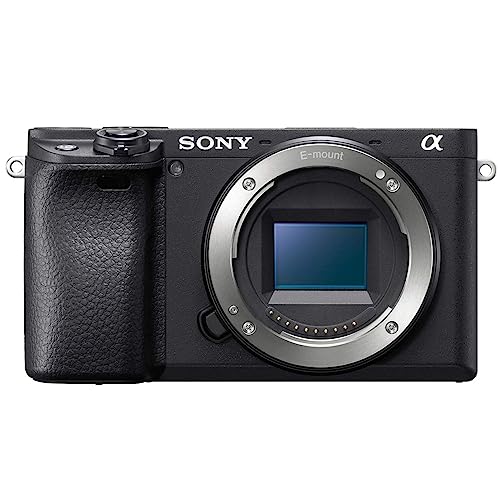
| Sony Alpha a6400 On our deal list | APS-C · 24MP | Fast eye-AF on a budget; no in-body stabilization | On our deal list |
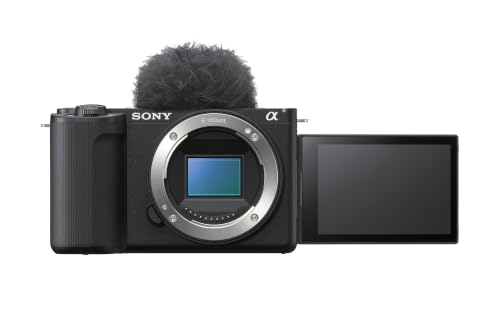
| Sony ZV-E10 II On our deal list | APS-C · 26MP | Vlogging and video-first creators; no EVF | On our deal list |
Two body details change which lens you should buy. First, the a6400 and ZV-E10 II have no in-body image stabilization (IBIS), so a stabilized lens (Sony “OSS” or Tamron “VC”) is worth more on them, especially for handheld video. Second, full-frame bodies reward full-frame (FE) lenses: an APS-C lens on an a7-series body forces crop mode.
Full frame (FE) vs APS-C (E) lenses
Sony labels full-frame lenses FE and APS-C lenses E. Sigma uses DG DN for full frame and DC DN for APS-C; Tamron uses Di III for full frame and Di III-A for APS-C. All of them physically fit all E-mount bodies.
- FE lens on an APS-C body: works perfectly; the view is cropped by about 1.5×. Good if you plan to move to full frame later.
- APS-C lens on a full-frame body: works in crop mode with fewer megapixels. Acceptable for video or a temporary setup, not ideal long-term.
- Cost and size: APS-C lenses are smaller and cheaper for the same field of view and aperture. If you’re happy on APS-C, buy APS-C lenses.
Equivalent focal lengths for the lenses on our list:
| Lens | On full frame | On APS-C (1.5×) |
|---|---|---|
| Sigma 18-50mm f/2.8 (APS-C) | Crop mode only | ≈ 27-75mm |
| Tamron 17-70mm f/2.8 (APS-C) | Crop mode only | ≈ 26-105mm |
| Sigma 30mm f/1.4 (APS-C) | Crop mode only | ≈ 45mm |
| Sony FE 50mm f/1.8 | 50mm | ≈ 75mm |
| Sony FE 85mm f/1.8 | 85mm | ≈ 128mm |
| Tamron 28-75mm f/2.8 G2 | 28-75mm | ≈ 42-113mm |
Best Sony E-mount lenses by focal length
These are our value picks — not the most expensive option at each length, but the one most buyers should check first. Items tagged “On our deal list” are tracked on our Sony E deals page; others open an Amazon search so you can compare current listings.
| Focal length / use | Full-frame (FE) pick | APS-C (E) pick | Notes |
|---|---|---|---|
| Ultra-wide (landscape, interiors) | Sony FE 20mm f/1.8 G | Sigma 10-18mm f/2.8 DC DN | Sony’s E 10-20mm f/4 PZ G is a lighter APS-C alternative |
| Standard zoom (everyday) | Tamron 28-75mm f/2.8 G2 On our deal list | Sigma 18-50mm f/2.8 On our deal list | The two value standards on E-mount; neither is stabilized |
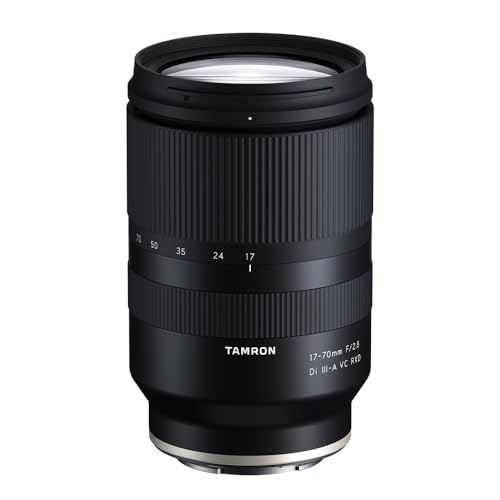
| Stabilized APS-C zoom | — | Tamron 17-70mm f/2.8 VC On our deal list | Lens stabilization matters on the a6400 and ZV-E10 II, which lack IBIS |
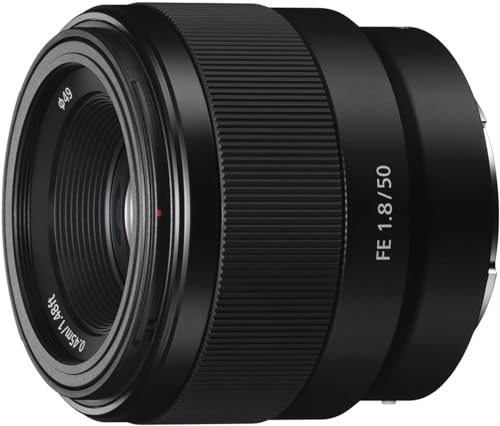
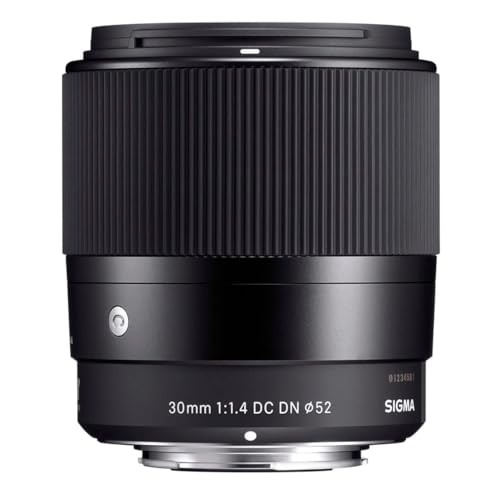
| Normal prime (35–50mm) | Sony FE 50mm f/1.8 On our deal list | Sigma 30mm f/1.4 On our deal list | Sigma 30mm on APS-C ≈ 45mm equivalent; brighter and sharper than the FE 50mm f/1.8 on crop bodies |
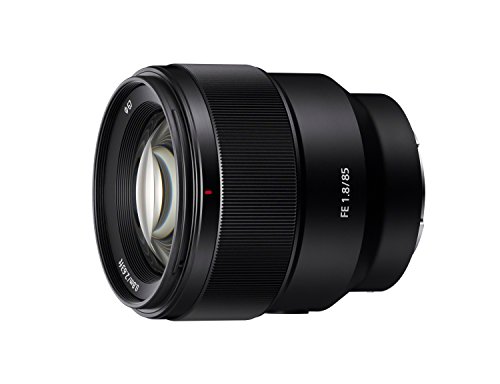
| Portrait (85mm) | Sony FE 85mm f/1.8 On our deal list | Sigma 56mm f/1.4 DC DN | FE 85mm on APS-C ≈ 128mm equivalent — tight but great for headshots |
| Telephoto zoom | Tamron 70-180mm f/2.8 G2 | Sony E 70-350mm f/4.5-6.3 G OSS | Sony FE 70-200mm f/4 Macro G OSS II is the lighter first-party FE option |
| Wildlife / sports | Sony FE 200-600mm G OSS | Tamron 150-500mm | Full-frame lenses work fine on APS-C and gain 1.5× reach |
Why the Tamron 28-75mm G2 over Sony’s 24-70mm GM II?
Sony’s FE 24-70mm f/2.8 GM II is lighter and a little sharper, with a wider 24mm end, but it typically costs around twice as much. The Tamron G2 gives you constant f/2.8, fast and quiet VXD autofocus, close focusing at the wide end and weather sealing for roughly half the money. Unless you need 24mm or you’re a working pro, the Tamron is the better buy. See our Tamron 28-75mm G2 page for specs and alternatives.
Budget primes: FE 50mm f/1.8 vs FE 85mm f/1.8
The FE 50mm f/1.8 is the cheapest fast full-frame lens Sony makes, but its autofocus motor is slow and audible — fine for portraits and travel, frustrating for video or kids. The FE 85mm f/1.8 costs more but focuses quickly and quietly, is very sharp, and is the better long-term portrait lens. If you can stretch, the 85mm is the one to own; if you need a cheap low-light lens today, the 50mm still delivers.
Third-party lenses on Sony E
Third-party lenses are a strength of the system, not a compromise. A few practical notes:
- Sigma — the Contemporary APS-C primes (16mm, 30mm, 56mm f/1.4) and the 18-50mm f/2.8 are the best-value APS-C kit on any mount. Full-frame DG DN Art lenses compete with Sony G Master.
- Tamron — zooms are the specialty: 28-75mm G2, 70-180mm G2, 17-70mm and 150-500mm. Tamron lenses have a USB-C port for firmware updates via Tamron Lens Utility.
- Viltrox, Samyang, Sirui, TTArtisan — budget autofocus primes, often very good optically. Check reviews for AF consistency in video, and buy from a seller with easy returns.
- Feature support — modern third-party lenses support eye AF, tracking and IBIS. Some Sony-only features (certain focus-breathing compensation modes, top burst rates on pro bodies) may be limited to Sony lenses.
Adapters: using Canon EF, Sony A-mount and vintage lenses
Mirrorless E-mount has a short flange distance, so almost any SLR lens can be adapted:
- Canon EF → Sony E: electronic adapters (Sigma MC-11, Metabones Smart Adapter, and others) pass aperture and autofocus. Sigma’s own EF lenses on the MC-11 are the most reliable combination. Expect slower continuous AF than native lenses.
- Sony/Minolta A-mount → E: Sony’s LA-EA3 and LA-EA5 adapters. AF support depends on the lens motor type and the body.
- Vintage manual lenses: simple “dumb” adapters are inexpensive. Use focus peaking and magnification; IBIS bodies let you enter the focal length for stabilization.
Rule of thumb: adapt lenses you already own. If you’re buying new, a native E-mount lens is almost always the better purchase.
What’s a good price on a Sony E lens?
- Sony first-party lenses usually sell at list except during instant-rebate windows. A rebate of 10–20% off list is a strong price; see our price drops methodology.
- Sigma and Tamron lenses discount more often; 15–25% below list on mature models is common.
- Kit bundles (body + lens) can save money on the lens, but check that the bundled lens is one you actually want.
- Avoid grey-market listings if you want a US Sony warranty; buy from Amazon directly or Sony’s storefront where possible.
Shopping during the holidays? Read our Black Friday lens deals guide for how to spot inflated “was” prices.